
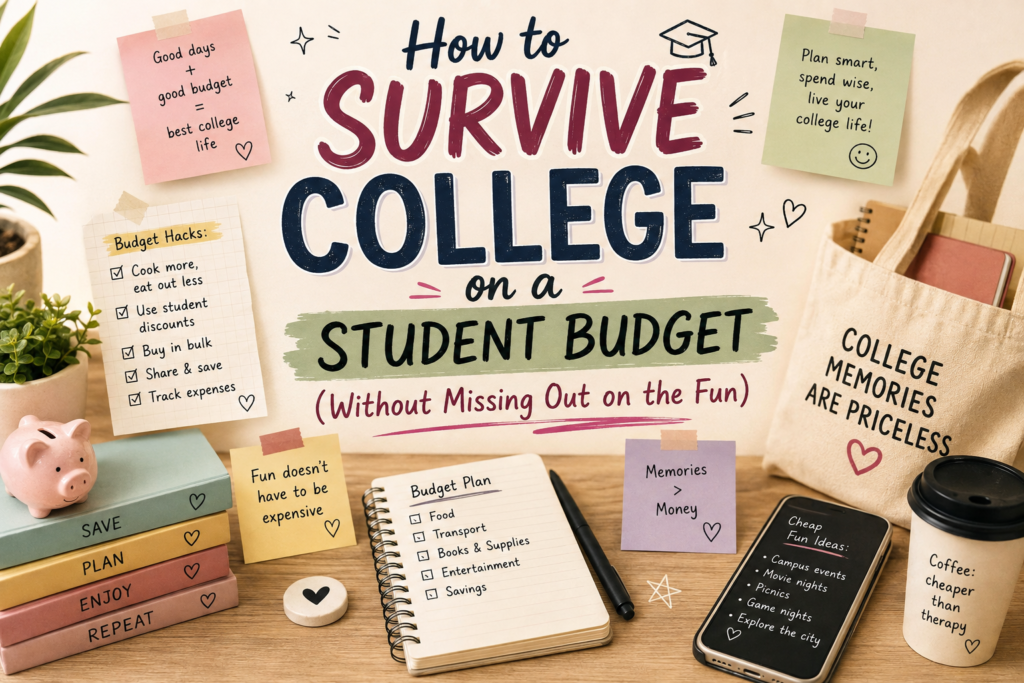
One of the biggest surprises of college isn’t the assignments, the attendance requirements, or even the amount of coffee students consume during exam season. It’s realizing how quickly money disappears. You enter college thinking your monthly budget is more than enough. A few café visits, food deliveries, cab rides, society contributions, and online shopping purchases later, you’re checking your bank balance and wondering where all your money went.
If you’ve ever said, “I’ll start saving next month,” you’re not alone. The good news? Surviving college on a student budget doesn’t mean giving up everything fun. It simply means spending smarter so you can enjoy your college years without constantly stressing about money.
The Student Budget Struggle Is Real
College is often the first time many students have control over their own spending. In school, most expenses were managed by parents. In college, suddenly you’re making daily decisions about food, transportation, outings, subscriptions, shopping, and entertainment.
At first, it feels exciting. Then reality arrives, that ₹250 coffee outing turns into ₹600 after snacks. A quick food delivery becomes a weekly habit. A few “small purchases” during a sale add up to a surprisingly large amount. The problem isn’t usually one expensive purchase. It’s the dozens of small expenses that quietly drain your budget.
Stop Comparing Your Lifestyle to Instagram
Social media has made student budgeting much harder.
Every day, we’re exposed to:
- Students eating at trendy cafés
- Shopping hauls
- Weekend trips
- Concerts and events
- Expensive gadgets and accessories
After a while, it starts to feel like everyone is living a more exciting life than you, but remember social media shows spending, not savings. People share what they buy, where they go, and what they experience. They rarely post how much they’re spending, what they sacrificed, or whether they’re struggling financially afterward. Trying to keep up with an online lifestyle is one of the fastest ways to exhaust your budget.
Your financial situation doesn’t need to look like someone else’s highlight reel.
The ₹100 Rule
Before making a purchase, ask yourself one simple question:
“Would I still want this tomorrow?” Many student purchases happen because of boredom, peer pressure, convenience, or impulse. A good habit is to pause before spending on non-essential items. If you still genuinely want or need it after some time, go ahead.
If not, you’ve probably saved yourself money. Small decisions like these can make a huge difference over an entire semester.
Food Is Usually Where Most Money Goes
For many students, food becomes the biggest budget killer. A single food delivery may not seem expensive but ordering multiple times every week can easily consume a large portion of your monthly allowance. This doesn’t mean you should never order food. It means being intentional about it.
Some practical habits include:
- Carrying a water bottle instead of buying drinks regularly
- Eating before going out with friends
- Taking advantage of college canteens when possible
- Treating food deliveries as an occasional reward rather than a daily habit
Your future bank balance will thank you.
Learn the Difference Between Wants and Needs
This sounds obvious until you’re staring at a discount notification. A need is something necessary. A want is something you’d like to have. The challenge is that modern marketing makes wants feel like needs.
Students often convince themselves they need:
- Another notebook
- New stationery
- Another hoodie
- A productivity app subscription
- A gadget upgrade
Sometimes these purchases are justified. Sometimes they’re simply impulse decisions disguised as necessities. The more honest you are with yourself, the easier budgeting becomes.
Enjoy College Without Spending Constantly
One common misconception is that having fun requires spending money. In reality, some of the best college memories cost very little.
Think about:
- Walking around campus with friends
- Society events
- College fests
- Sports activities
- Study sessions that become gossip sessions
- Exploring new places using public transport
- Movie nights in hostel rooms or at home
Years later, you’ll remember the people and experiences far more than the expensive meals or shopping trips.
Avoid the “Everyone Is Going, So I Should Too” Mindset
Peer pressure doesn’t disappear after school. It just changes form.
In college, it often sounds like:
- “Everyone’s ordering.”
- “We’re all going.”
- “It’s only a little expensive.”
- “You can spend once.”
And occasionally, that’s completely fine but constantly saying yes to avoid missing out can seriously damage your budget. Learning to decline plans that don’t fit your finances isn’t rude. It’s responsible. The people who genuinely care about you won’t judge you for it.
Create a Simple Budget You Can Actually Follow
Many students fail at budgeting because they make it too complicated. You don’t need spreadsheets with twenty categories. Start simple. Divide your monthly money into three groups:
Essentials
Transportation, study materials, phone recharge, daily expenses.
Savings
Even setting aside a small amount each month creates good financial habits.
Fun Money
Food outings, shopping, entertainment, and social activities. When your fun money is finished, that’s your signal to slow down until the next month. Simple systems are often the most effective.
Remember: Being Broke Isn’t a Personality Trait
Many students joke about being broke all the time. While financial struggles are common, constantly overspending and relying on last-minute solutions can create unnecessary stress. Building good money habits during college can make a huge difference later in life. Budgeting isn’t about restricting yourself. It’s about giving yourself freedom and control over your finances.
Final Thoughts
College is full of opportunities, experiences, and memories—but it can also be surprisingly expensive if you’re not careful. The goal isn’t to avoid spending money altogether. The goal is to spend on things that genuinely add value to your life while avoiding expenses you’ll regret later. You don’t need the most expensive clothes, gadgets, or café visits to enjoy college. You need good friends, meaningful experiences, and enough financial stability to enjoy them without constantly worrying about your bank balance because surviving college on a student budget isn’t about missing out.
It’s about making smart choices so you can enjoy the journey without running out of money halfway through the semester.